

Our skin is constantly exposed to various chemicals and pollutants that make it look dull and rough. The skin is our largest organ, and caring for and maintaining it requires the right know-how.
Sweating is a natural mechanism, which our body uses to eliminate around 30% of all waste products. The pores open, and dirt is simply flushed out. This happens best in a sauna.
The regular sauna bathing can help rid our bodies of toxins and give the skin a natural, healthy glow.
It’s no wonder that owning a sauna is no longer unusual. But not all saunas are the same. Which type is best for your home? This article introduces two different types of saunas that are particularly suitable for home use.
The prefabricated sauna and the solid wood sauna.
What makes a prefabricated wooden sauna stand out?
The prefabricated sauna is assembled from several prefabricated wooden elements. This means experts can not only assemble it quickly, but also take it apart quickly.
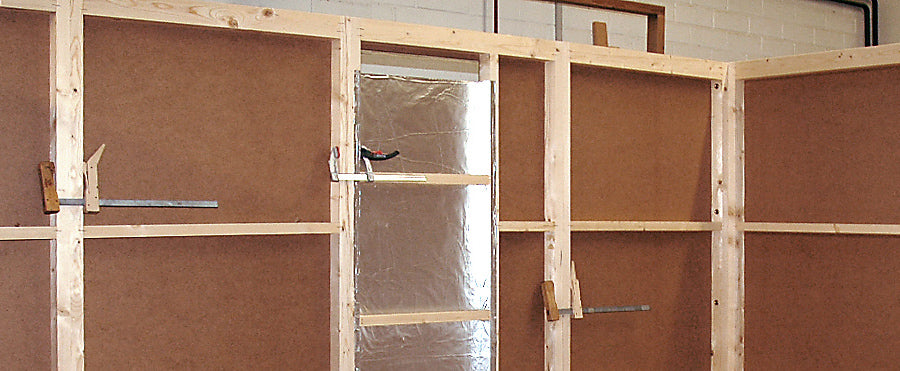
How is a prefabricated wooden sauna built?
The prefabricated sauna is built in several layers according to the so-called “sandwich construction method” , and the prefabricated elements are joined together. The sauna components consist of a framework, wooden cladding, a vapor barrier, an insulation layer, and an outer layer.
1. Framework
The sauna cabin’s framework consists of a frame made of squared timber, usually spruce.
2. Wooden cladding
For the wooden cladding, that is, the wooden interior wall of the prefabricated sauna, tongue-and-groove boards are attached to the frame, ensuring that the slats fit closely together.
A tongue-and-groove joint is a type of wood joint in which the ends fit together.
3. Vapor barrier
A heat-resistant layer is attached to the inside of the boards as a vapor barrier (usually pure aluminum). It prevents moisture from penetrating the insulation layer behind it and largely prevents mold from forming.
4. Insulation layer
The fourth layer consists of insulation, usually made from heat-resistant insulating material such as eco-friendly wood fiber insulation, rock wool, or glass wool. This insulation layer keeps the heat inside the sauna for longer.
5. Outer layer
Tongue-and-groove boards are then attached to the frame on the outside; these can be made from various materials, depending on your choice.
A panel-built sauna can therefore be installed wherever you choose with relatively little effort and adapted to different conditions, such as limited space.
What is a solid wood sauna?
Traditional Finnish sauna houses served as the model for today's solid wood sauna.
Only saunas whose basic components are cut from logs and processed further without mechanical or chemical means can be described as solid wood saunas.
The natural wood absorbs the heat generated by the sauna heater, stores it, and then releases it evenly.
The wood can absorb moisture, creating a pleasant atmosphere and releasing fragrant resins and essential oils and creates a natural, relaxing scent during your sauna session.
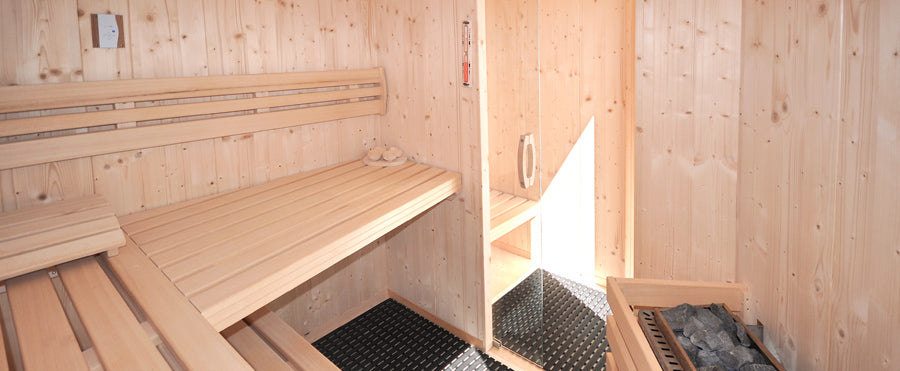
How is a solid wood sauna built?
When building a solid wood sauna, no artificial insulation materials are used, only natural materials. Unlike panel-built saunas, prefabricated building elements are also rarely used.
Wall and ceiling panels made of solid wood, usually Nordic spruce, are joined using a tongue-and-groove connection to form a hermetically sealed sauna wall.
No insulation system is needed here, as solid wood provides the required insulation once it reaches a certain thickness. The solid wood is processed in different thicknesses of around 40 to 60 millimeters.
With the wooden construction and the resulting pleasant scent of a solid wood sauna, you can bring a little piece of nature into your home.
Panel-built sauna or solid wood sauna?
Which sauna type is better for your home? Below, we discuss the advantages and disadvantages of the panel-built and solid wood saunas based on factors such as construction, insulation, and atmosphere.
Construction
The prefabricated construction of the element sauna gives you the opportunity to make your sauna dream come true even in smaller rooms, and to incorporate additional features such as doors, windows, and benches as you wish. Element saunas can be quickly dismantled and reassembled, which can prove useful if you move.
Solid wood saunas can also be individually adapted in size and fittings to suit the space available. Assembly of a solid wood sauna generally takes a little longer, as the solid wall and ceiling elements are fitted together one by one.
Thermal insulation
Thanks to its special mineral wool insulation layer, the element sauna has excellent thermal insulation and is a step ahead of the solid wood sauna.
The solid wood sauna makes use of the physical properties of “Mother Nature” - optimal heat insulation is achieved exclusively through the solid walls and ceilings made of solid wood.
Atmosphere:
One of the outstanding advantages of the element sauna is its varied appearance.
The wide selection of decorative and attractive wood types for the interior and exterior cladding makes it possible to fulfill individual wishes and requirements.
The same atmospheric conditions prevail throughout an element sauna as in a solid wood sauna.
A sauna visit is all about the comforting feeling of relaxing warmth, with the natural, all-wood solid wood sauna producing the most soothing warmth. The appearance of a solid wood sauna also contributes to this “sense of well-being” - solid, naturally grown wood creates a cozy and welcoming atmosphere.
Conclusion
Element or solid wood sauna - both sauna types have different strengths and specializations. Ultimately, which sauna model you choose is up to you and your individual lifestyle and personal preferences.
Regardless of your choice, purchasing a sauna is a sustainable investment that keeps paying off. The health benefits, in particular, such as detoxifying the body through the skin and the soothing relaxation, will soon become noticeable.